

For years, golf simulators have been defined by what they could show you.
A virtual fairway. A shot tracer. A set of numbers that attempted to replicate reality indoors.
They were tools—useful, often impressive—but still dependent on interpretation. You hit a shot, reviewed the data and decided what to do next.
In 2026, that relationship is already starting to change.
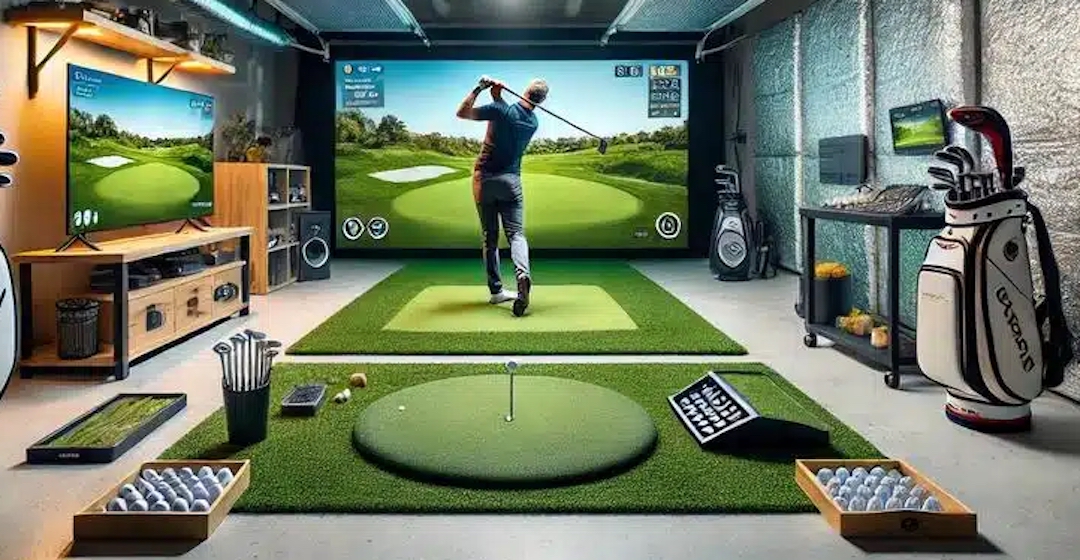
The latest generation of simulator systems is layering artificial intelligence directly into the experience, transforming what was once a passive feedback loop into something far more active. Systems like Uneekor’s Eye XR aren’t just tracking shots—they’re analyzing them in real time, offering insights that begin to resemble instruction rather than information.
The difference is subtle, but significant.
From Feedback to Guidance
Traditional launch monitors and simulators have always excelled at measurement. Ball speed, spin rate, launch angle—these metrics have become standard for serious players. But data alone has limits.
Understanding what those numbers mean—and how to adjust—has historically required a coach.
AI is beginning to fill that gap.
Modern simulator software can now identify patterns across swings, compare them to known benchmarks and deliver immediate feedback on what’s happening and why. Instead of simply displaying a miss, the system can begin to interpret it—flagging tendencies, suggesting corrections and tracking progress over time.
It’s not just reporting the swing; it’s responding to it.
The Coaching Layer
What’s emerging across the category is something new: a coaching layer built directly into the technology.
High-speed cameras capture the swing from multiple angles. Optical tracking systems map club and ball data without the need for markers or specialized equipment. That data feeds into software that breaks down motion, highlights inefficiencies and delivers suggestions within seconds.
The experience starts to feel less like hitting balls and more like working through a structured training session.
And unlike traditional instruction, it never turns off.
Golfers can step into a simulator at any time—before work, after dinner, between meetings—and receive the same level of feedback they might expect from a lesson. Every swing becomes part of a larger dataset, building a profile of tendencies and improvements over time.
Practice becomes less about volume and more about precision.
Indoor Golf’s Second Evolution
This shift also marks a turning point for indoor golf itself.
The first wave of simulators focused on replication—bringing famous courses into controlled environments. The second wave is focused on improvement.
Instead of asking, “Can this feel like real golf?” the question is becoming, “Can this make you better at real golf?”
The answer is increasingly yes.
Controlled conditions eliminate variables like wind and turf inconsistency. Data remains consistent from session to session. Feedback is immediate and measurable. Combined with AI, those factors create an environment where improvement can happen faster and more efficiently.
The simulator is no longer a substitute—it’s becoming a system.
Where It’s All Heading
If this trend continues, the implications are clear.
Simulators will become smarter. Coaching tools will become more integrated. And the line between technology and instruction will continue to blur.
Golfers won’t just use simulators to practice, they’ll use them to learn—and as that shift takes hold, one thing becomes increasingly clear: the smartest coach in the room might not be a person.
It might be the system watching and dissecting in every swing.
Inside the AI Upgrade Transforming Golf Simulators
AI-powered simulators are evolving into real-time coaching systems, transforming golf practice with instant feedback, swing analysis and smarter training tools.

· 5 months ago
Related Articles
Business
+1
Technology
Golf Tech Is Starting to Measure the Shot Before You Swing

Clubs
+2
Equipment
Technology
What Auditing 3,000 Golf Shaft Specs Taught Us About Weight
Business
+1
Technology
Golf Is Finally Getting Multiplayer Mode, Five Swings at a Time
Equipment
+2
Products
Technology

Golf's Next Computer Is 1.68 Inches Wide
Business
+2
Courses
Technology
The Golf Course Mechanic Is Becoming a Robotics Engineer

Business

LIV Golf Cancels Season Finale, Concerts Amid Operational Breakdown
Business
+1
Technology

Golf's Next Employee Might Just Be an AI Agent

Courses
+2
Tournaments
Podcast

Duff Foreman Could Make History as First Known AI Broadcast Personality to Join a Live Professional Golf Broadcast
Clubs
+2
Equipment
Technology

Golf's "Weirdest" Putters Are Winning the Engineering War

Business
+3
Products
Technology
Tournaments

ParTab Partners with iGolf to Bring Course Intelligence to the Games Golfers Actually Play
Business
+1
Technology

Golf AI Is Learning What Your Scorecard Can’t Tell You

Business
+1
Tournaments

iGolf Partners with Skins Golf to Power Its All-in-One Competitive Golf Platform
Business
+1
Tournaments

LIV Golf Cuts Prize Money Following Cancellation of Team Championship

Courses
+1
Tournaments

Carden Park Secures Women's PGA Cup Hosting Rights

Business
+2
Courses
Tournaments

LIV Golf's Season Finale Plans Scaled Back Amid Uncertainty
Equipment

TaylorMade Adds Hi-Toe 5 Wedge to Growing Wedge Portfolio
Business
+2
Products
Technology
Your Apple Watch Is Coming for Your Golf Watch
Business
+1
Tournaments

LIV Golf's Bedminster Event Draws Trump, Surfaces Mystery Investor

Equipment
+1
Products
Titleist Equipment Wins 2026 Wyndham Championship with Michael Brennan
Business
+2
Equipment
Products
Callaway and Acushnet Report Q2 Revenue Gains Across Core Segments