

For decades, forged irons have occupied a distinct place in golf equipment. They represent craftsmanship, feel and shot-making control — attributes often associated with traditional design philosophies rather than technological experimentation. But Wilson’s latest DYNAPWR Forged iron challenges that assumption, blending classic forging with modern computational engineering in a way that reflects a broader shift across golf equipment development.
The release highlights an emerging reality: even golf’s most heritage-driven categories are being reshaped by artificial intelligence and advanced simulation.
At first glance, the DYNAPWR Forged iron appears rooted in tradition. Built from forged 8620 carbon steel, the club delivers the soft feel and clean aesthetics typically favored by accomplished players. But beneath that familiar exterior lies a design process that departs significantly from conventional methods.
Rather than relying solely on iterative physical prototypes, Wilson employed AI modeling to optimize variable face thickness patterns throughout the clubface. The approach allows engineers to simulate thousands of strike scenarios, identifying flex zones that preserve ball speed across a wider portion of the face. In practice, this translates to enhanced speed retention on imperfect contact — a performance benefit historically difficult to achieve in forged irons without sacrificing feel.
Central to this architecture is Wilson’s PKR-CUP face construction, which extends the clubface into the sole to create a thinner hinge region capable of greater flex at impact. The design not only improves energy transfer but also relocates weld lines away from the primary strike area, enabling more precise tuning of face behavior without structural compromise.
The engineering decision reflects a broader industry trend toward simulation-driven design. As computing power accelerates, equipment manufacturers increasingly rely on algorithmic optimization to refine performance characteristics at a granular level. Golf clubs, once shaped primarily through mechanical intuition, are now being digitally sculpted before manufacturing begins.
For golfers, the practical implication is consistency. The DYNAPWR Forged iron is engineered less as a distance-maximization tool and more as a stability platform — one that aims to deliver predictable launch and speed profiles across varying strike locations.
Wilson’s design also marks a departure from earlier DYNAPWR iterations by eliminating the visible power holes that previously defined the product line. Advances in face optimization and mass distribution allowed engineers to preserve speed while simplifying the visual profile and enhancing structural integrity.
The change underscores how AI-driven modeling can replace mechanical design features with internal optimization, producing cleaner aesthetics without sacrificing performance.
Feel remains a defining element of forged iron identity, and Wilson’s approach integrates modern acoustic engineering to preserve that attribute. Urethane damping material positioned within the cavity helps manage vibration patterns, fine-tuning sound and tactile feedback. In contemporary club design, acoustics are increasingly treated as performance variables, influencing player perception of strike quality and confidence at address.
The DYNAPWR Forged iron’s material composition further reinforces this balance between tradition and innovation. Forged carbon steel provides the responsive feedback players expect, while internal geometry optimization enhances forgiveness characteristics that were once difficult to achieve in players-distance irons.
This convergence of feel and forgiveness highlights an evolving definition of iron performance. Historically, golfers often accepted a trade-off between playability and feedback, with forgiving irons sacrificing responsiveness and forged irons demanding precision. AI-assisted design is narrowing that gap, enabling manufacturers to engineer irons that deliver both.
From a broader perspective, the DYNAPWR Forged iron exemplifies a quiet transformation occurring across golf equipment. Innovation is no longer confined to visible technologies such as adjustable weights or composite materials. Instead, performance gains increasingly emerge from invisible refinements — microscopic thickness variations, vibration tuning and algorithmic optimization.
The shift mirrors trends across adjacent technology sectors, where simulation and computational modeling are redefining product development. Automotive engineering, aerospace design and consumer electronics have all embraced virtual prototyping as a primary innovation pathway. Golf equipment is now following suit.
Ultimately, Wilson’s latest iron release reflects a philosophical evolution as much as a technological one. The emphasis on consistency, predictability and feel suggests that modern equipment design prioritizes reliability over headline-grabbing performance metrics. In a sport defined by precision, reducing variability often produces more meaningful scoring improvements than incremental distance gains.
For golfers, the DYNAPWR Forged iron represents a familiar shape infused with unfamiliar engineering depth. It preserves the sensory qualities that define forged irons while leveraging AI to address their historical limitations.
The result is not a radical reinvention of the category, but a refinement that signals where iron design is heading. Performance is increasingly shaped by computation rather than intuition, by simulation rather than iteration.
And in golf, where marginal gains accumulate over thousands of swings, those invisible refinements may ultimately prove transformative.
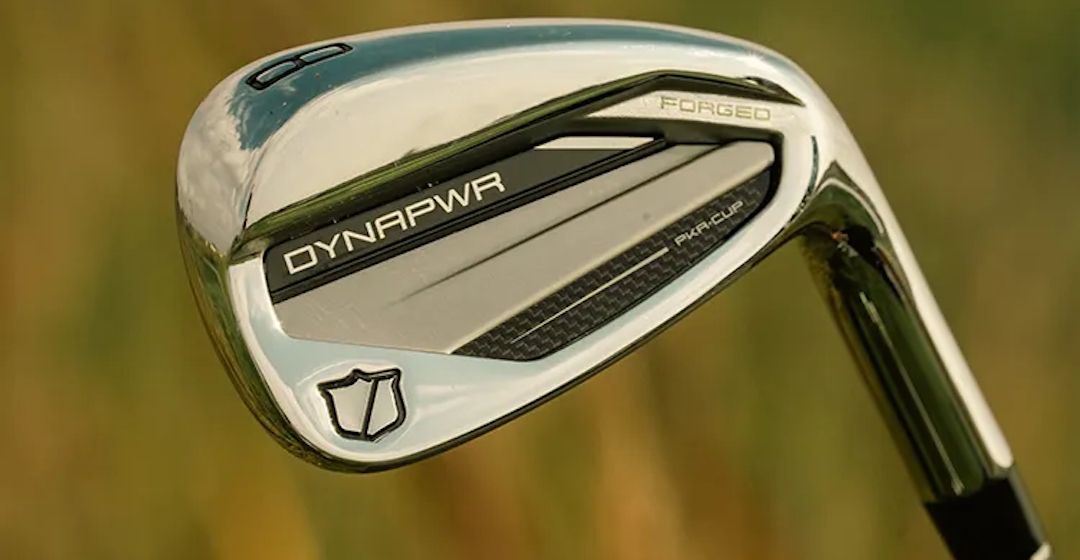
Wilson’s AI-Designed DYNAPWR Forged Iron Signals a New Era of Precision Engineering
Wilson’s DYNAPWR Forged iron uses AI face optimization and PKR-CUP construction to deliver classic forged feel with improved speed, forgiveness & consistency.

· 7 months ago
Related Articles
Business
+1
Technology

Golf Tech Is Starting to Measure the Shot Before You Swing

Clubs
+2
Equipment
Technology

What Auditing 3,000 Golf Shaft Specs Taught Us About Weight
Business
+1
Technology

Golf Is Finally Getting Multiplayer Mode, Five Swings at a Time
Equipment
+2
Products
Technology

Golf's Next Computer Is 1.68 Inches Wide
Business
+2
Courses
Technology
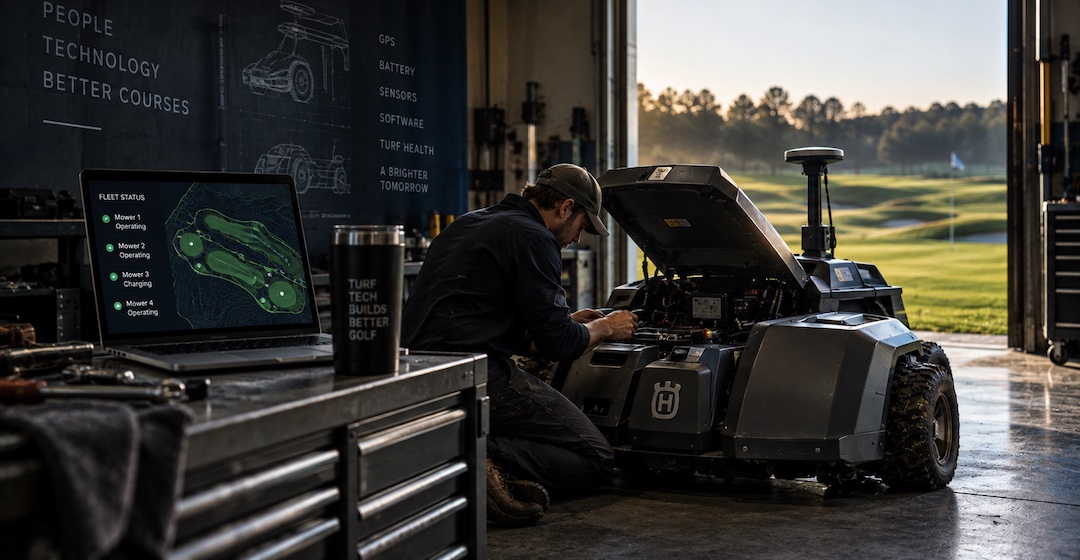
The Golf Course Mechanic Is Becoming a Robotics Engineer

Business

LIV Golf Cancels Season Finale, Concerts Amid Operational Breakdown
Business
+1
Technology

Golf's Next Employee Might Just Be an AI Agent

Courses
+2
Tournaments
Podcast

Duff Foreman Could Make History as First Known AI Broadcast Personality to Join a Live Professional Golf Broadcast
Clubs
+2
Equipment
Technology

Golf's "Weirdest" Putters Are Winning the Engineering War

Business
+3
Products
Technology
Tournaments

ParTab Partners with iGolf to Bring Course Intelligence to the Games Golfers Actually Play
Business
+1
Technology

Golf AI Is Learning What Your Scorecard Can’t Tell You

Business
+1
Tournaments

iGolf Partners with Skins Golf to Power Its All-in-One Competitive Golf Platform
Business
+1
Tournaments

LIV Golf Cuts Prize Money Following Cancellation of Team Championship

Courses
+1
Tournaments

Carden Park Secures Women's PGA Cup Hosting Rights

Business
+2
Courses
Tournaments

LIV Golf's Season Finale Plans Scaled Back Amid Uncertainty
Equipment
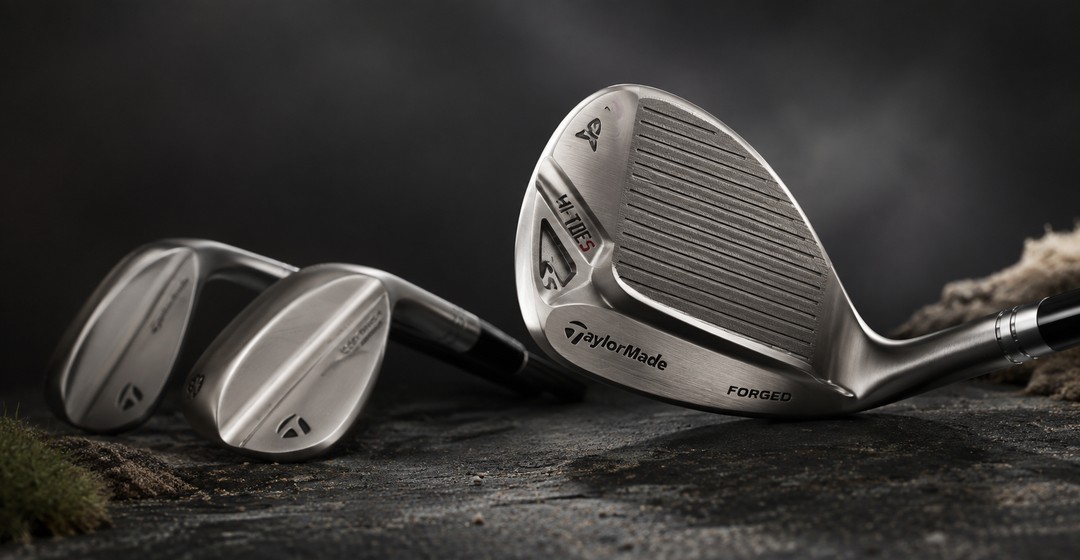
TaylorMade Adds Hi-Toe 5 Wedge to Growing Wedge Portfolio
Business
+2
Products
Technology
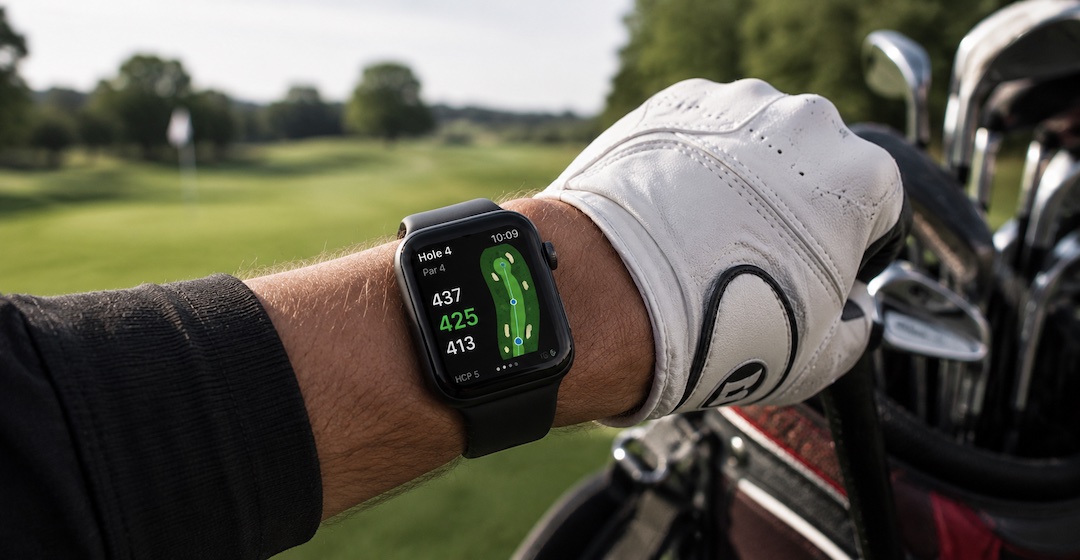
Your Apple Watch Is Coming for Your Golf Watch
Business
+1
Tournaments

LIV Golf's Bedminster Event Draws Trump, Surfaces Mystery Investor

Equipment
+1
Products
Titleist Equipment Wins 2026 Wyndham Championship with Michael Brennan
Business
+2
Equipment
Products

Callaway and Acushnet Report Q2 Revenue Gains Across Core Segments