

For more than a century, the driving range has been one of golf’s simplest environments. A stretch of grass. A bucket of balls. A repetitive ritual of swings disappearing into the distance.
That simplicity has always been part of the appeal.
But in 2026, the driving range is beginning to look a little different. Data has arrived. Sensors are everywhere. And now companies are starting to reimagine the range itself as a digital platform.
One of the more ambitious examples comes from TruGolf, the simulation technology company best known for its E6 simulator software and launch monitor systems. At the 2026 PGA Show, the company previewed something it calls TruGolf RANGE—a multiplayer indoor driving range concept that blends simulator technology, analytics and artificial intelligence into a shared practice environment.
At first glance, the idea feels like a natural evolution of the simulator boom that has swept through golf over the past decade. But the underlying ambition is bigger than simply recreating a driving range indoors.
It’s about transforming practice into something interactive, measurable and social.
The Range, Reimagined
Traditional golf simulators are typically solitary experiences. One player hits shots into a screen while a launch monitor measures the result. It’s precise and often immersive, but rarely communal.
TruGolf’s RANGE platform flips that model.
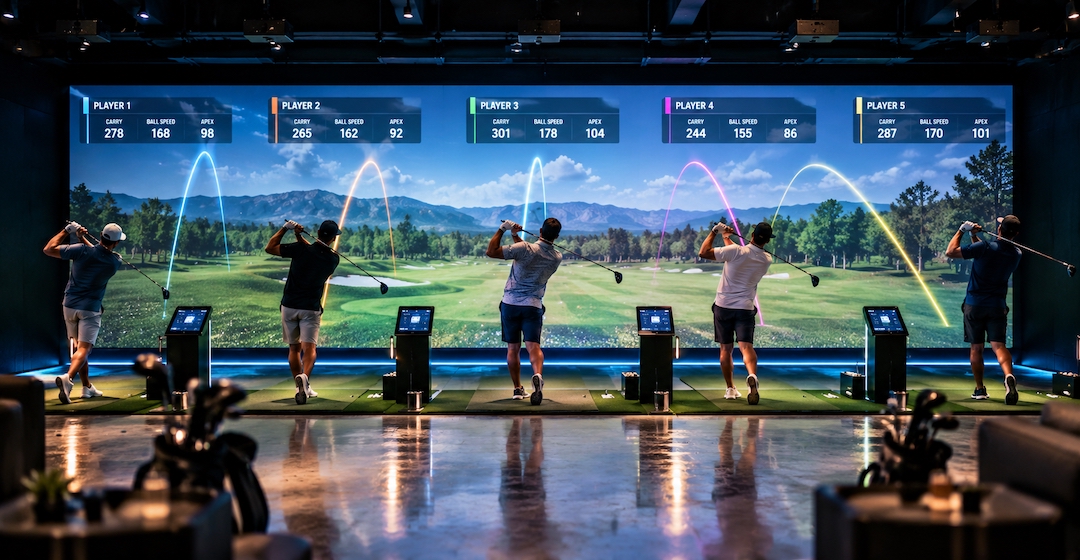
Instead of a single hitting station, the system allows as many as seven players to practice simultaneously, all hitting toward a shared cinematic display that visualizes ball flight in real time.
The effect is meant to replicate the feel of an outdoor driving range—multiple golfers hitting shots side by side—while layering in the analytics and visual feedback that simulator technology makes possible.
Players see their shots tracked instantly across a massive screen. Distances and trajectories appear in real time. Data accumulates as each swing is logged and analyzed.
In short, the driving range becomes a data environment.
The AI Layer
Where the concept becomes particularly interesting is in its integration of artificial intelligence.
Embedded within the system is a feature called TruGolf AI Coach, a software layer designed to interpret shot data and translate it into actionable feedback.
Rather than simply displaying numbers—ball speed, launch angle, spin rate—the AI analyzes patterns in a player’s shots. It identifies tendencies. It detects inconsistencies. And then it recommends drills or adjustments aimed at correcting them.
The goal is to transform raw data into guidance.
For decades, golf instruction has relied heavily on human observation and interpretation. AI coaching tools attempt to augment that process by detecting patterns across thousands of swings that might otherwise go unnoticed.
In the context of a driving range, that changes the nature of practice itself. Instead of simply hitting balls and hoping improvement follows, players receive structured feedback as they go. Practice becomes iterative.
Social Practice
The multiplayer design is equally significant.
Golf has always been a social sport on the course but a largely solitary activity during practice sessions. Players arrive at the range alone, hit balls alone and leave without interaction.
TruGolf RANGE attempts to turn practice into something closer to a group experience.
The platform supports games, skills challenges and competitive practice formats where players can compare performance in real time.
That element matters because engagement is one of the biggest challenges facing driving ranges. Many golfers struggle to maintain consistent practice routines, particularly when sessions feel repetitive or disconnected from real-world play.
By layering competitive elements and group participation into the environment, simulation platforms hope to make practice more compelling—and more frequent.
The result begins to resemble something halfway between a driving range and a gaming arena.
A Business Model for Modern Golf Facilities
While the player experience attracts attention, the concept also addresses something else: the economics of running a golf range.
Outdoor driving ranges come with operational complexities. Land requirements are substantial. Maintenance costs can be significant. Weather limits operating hours in many regions.
Indoor range platforms offer a different model.
Because they operate in controlled environments, facilities can remain open year-round. Sessions can be scheduled more efficiently. And data tracking allows operators to create leagues, coaching programs and subscription services around the experience.
TruGolf has framed the platform as a scalable solution for clubs, resorts and commercial entertainment venues looking to modernize practice infrastructure.
The first installation is planned as part of the Golf Everywhere development project in Flower Mound, Texas, where the concept will serve as a test case for how digital ranges might function in real-world facilities.
If the model proves successful, it could influence how future practice facilities are designed.
The Evolution of Practice
What makes platforms like TruGolf RANGE interesting isn’t simply the technology itself. It’s what that technology implies about the future of golf practice.
Traditionally, practice has been analog. Players hit balls and rely on feel to interpret results. Even with launch monitors, most ranges remain environments where feedback is limited and improvement depends heavily on self-diagnosis.
Digital ranges shift that dynamic.
Sensors capture every swing. Algorithms interpret the results. Coaching tools translate data into recommendations. Multiplayer systems introduce competition and engagement.
The entire practice experience becomes measurable.
This transformation mirrors trends across sports technology. Basketball players now train with sensor-equipped shooting systems. Baseball hitters rely on motion-capture analytics. Golf, long defined by tradition, is gradually entering the same data-driven era.
A Different Kind of Driving Range
None of this means outdoor ranges are disappearing. The experience of watching a ball climb into the sky remains one of golf’s simplest pleasures.
But as technology evolves, the definition of a driving range may expand.
Future practice facilities may blend traditional hitting bays with digital analytics, immersive visuals and AI-guided coaching. Some will exist outdoors. Others will exist entirely indoors.
What matters is that the practice environment is changing.
TruGolf RANGE represents one possible version of that future—a place where players don’t just hit balls into the distance.
They train inside a system.
And as golf technology continues to move from equipment to environments, the next breakthrough in the game may not come from a clubhead or a golf ball.
It may come from the range itself.
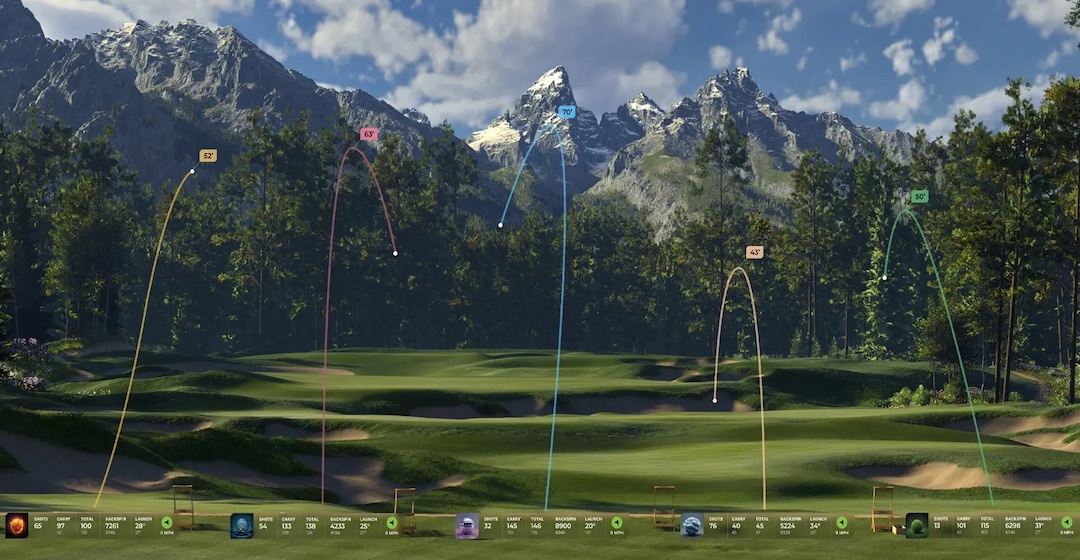
The Driving Range Is Going Digital — And TruGolf Wants to Build It
Platform turns the driving range into a multiplayer indoor training system, combining simulators, analytics and AI coaching to redefine modern golf practice.

· 7 months ago
Related Articles
Business
+1
Technology
Golf Tech Is Starting to Measure the Shot Before You Swing

Clubs
+2
Equipment
Technology

What Auditing 3,000 Golf Shaft Specs Taught Us About Weight
Business
+1
Technology
Golf Is Finally Getting Multiplayer Mode, Five Swings at a Time
Equipment
+2
Products
Technology

Golf's Next Computer Is 1.68 Inches Wide
Business
+2
Courses
Technology
The Golf Course Mechanic Is Becoming a Robotics Engineer

Business

LIV Golf Cancels Season Finale, Concerts Amid Operational Breakdown
Business
+1
Technology

Golf's Next Employee Might Just Be an AI Agent

Courses
+2
Tournaments
Podcast

Duff Foreman Could Make History as First Known AI Broadcast Personality to Join a Live Professional Golf Broadcast
Clubs
+2
Equipment
Technology

Golf's "Weirdest" Putters Are Winning the Engineering War

Business
+3
Products
Technology
Tournaments

ParTab Partners with iGolf to Bring Course Intelligence to the Games Golfers Actually Play
Business
+1
Technology

Golf AI Is Learning What Your Scorecard Can’t Tell You

Business
+1
Tournaments

iGolf Partners with Skins Golf to Power Its All-in-One Competitive Golf Platform
Business
+1
Tournaments

LIV Golf Cuts Prize Money Following Cancellation of Team Championship

Courses
+1
Tournaments

Carden Park Secures Women's PGA Cup Hosting Rights

Business
+2
Courses
Tournaments

LIV Golf's Season Finale Plans Scaled Back Amid Uncertainty
Equipment

TaylorMade Adds Hi-Toe 5 Wedge to Growing Wedge Portfolio
Business
+2
Products
Technology
Your Apple Watch Is Coming for Your Golf Watch
Business
+1
Tournaments

LIV Golf's Bedminster Event Draws Trump, Surfaces Mystery Investor

Equipment
+1
Products

Titleist Equipment Wins 2026 Wyndham Championship with Michael Brennan
Business
+2
Equipment
Products

Callaway and Acushnet Report Q2 Revenue Gains Across Core Segments