






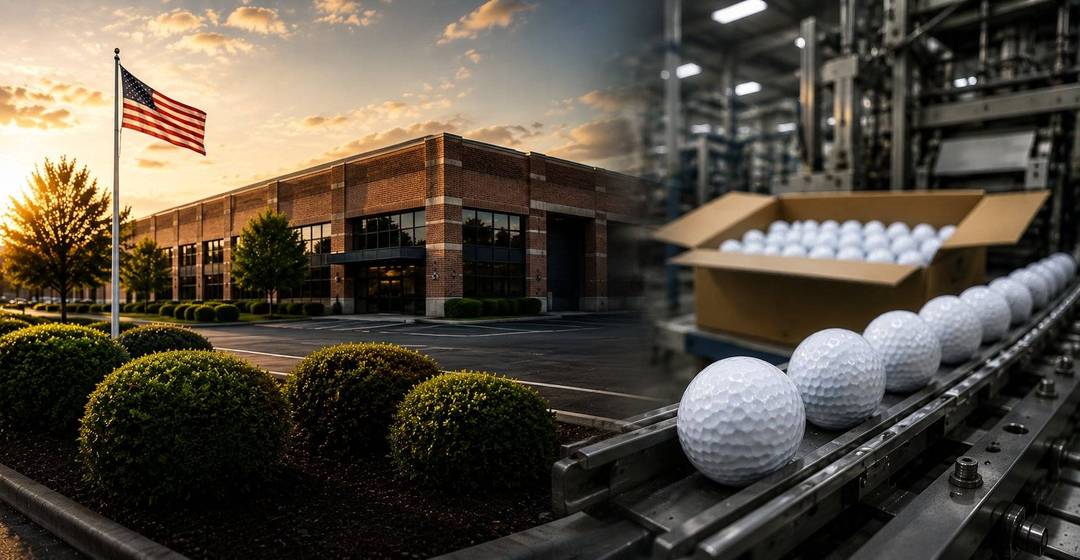

Bridgestone Golf will permanently close its Covington, Georgia ball manufacturing and testing facility effective June 30, ending 36 years of U.S.-based production and eliminating approximately 86 jobs. All manufacturing operations transfer to the company's existing facility in Seki, Japan, where the majority of Bridgestone's golf balls are already made. The closure is being framed internally as a supply chain optimization — but for an industry watching global manufacturing economics reshape how equipment brands operate, it represents something more significant: one of the last major holdouts in domestic golf ball production is walking away.
Bridgestone Golf functions as a division of Bridgestone Corporation, the world's second-largest tire manufacturer by revenue. The Covington plant was a genuine competitive asset for decades. At peak capacity, the facility produced up to a billion golf balls per year, and by 2014, all of Bridgestone's premium ball output was concentrated there. For a period, the "Made in America" story supported the brand's positioning against rivals. The plant also had a broader community impact — contributing to the economic development of Newton County, Georgia, and supporting local school programming that helped push the area's high school graduation rate from below 60% to above 90%.
The economic rationale for closing is straightforward. Bridgestone Golf USA President and CEO Dan Murphy characterized the move as a path to making the company "stronger and leaner," with savings redirected toward marketing and tour promotion. According to Golf Digest's reporting, the brand currently trails not only category leader Acushnet/Titleist but has also dropped behind both Callaway and TaylorMade in recent U.S. market positioning. Murphy noted that approximately 95% of golf products sold in the United States are already manufactured overseas — a figure that underscores how isolated Bridgestone's domestic operation had become, and how closely the move aligns the company with how most competitors already run their businesses.
The Covington closure reflects a broader industry reckoning. U.S.-based golf manufacturing, already scarce at scale, has become increasingly difficult to sustain against rising operational costs, tariff exposure, and supply chain volatility. Bridgestone had the financial backing of a near-$30 billion parent company and still concluded that consolidating overseas was the right call. Other equipment brands still operating domestic facilities — or weighing whether to — will likely view this as a meaningful data point.
For companies across the golf equipment sector, the clearest signal here is that competitive advantage is no longer built at the factory level. Bridgestone's move is a direct bet that brand investment and tour presence generate more commercial return than domestic production ever could. With the savings directed at marketing and consumer engagement, the company is aligning its priorities with where the real battles for market share are being fought. Brands that haven't yet run this calculus may find it harder to argue the other side after watching one of the world's most recognized ball manufacturers reach this conclusion.
.
Source: GolfDigest.com — "Bridgestone to shut down U.S. ball plant, shift manufacturing to Japan facility" (May 1, 2026) https://www.golfdigest.com/story/bridgestone-to-shut-down-us-ball-plant-shift-manufacturing-to-japan